Practice-Owned. Professionally Operated.

A Faster Diagnostic Answer, Without a New Daily Workload

Selected testing closer to the clinical decision, less dependence on outside laboratory timelines, and qualified laboratory professionals handling daily operations.

Qualified laboratory professionals handle daily operations. We coordinate the staffing, documentation, validation, and implementation required to prepare the capability for launch.

The six stages

  1. 01Assess — Practice readiness profile
  2. 02Design — Custom laboratory plan
  3. 03Equip — Installed, configured laboratory
  4. 04Validate — Validation records and SOPs
  5. 05Staff — Practice-employed laboratory team
  6. 06Launch — Laboratory ready for operations

Who does what

Your Practice Owns the Capability. We Build the Operating System.

We handle the implementation. Your practice owns the laboratory and ongoing governance.

We handle

Building and equipping the operation

  • Equipment purchase, delivery, installation, and configuration
  • Agreed CLIA and accreditation fees
  • Initial reagents and consumables for the launch menu
  • Laboratory design, validation support, SOPs, and quality documentation
  • LIS and billing coordination
  • Director and supervisor placement, staff recruitment, training, and launch

Your practice provides

Space, team, and ongoing governance

  • Laboratory space and utilities
  • Employment of the laboratory team
  • Approval of the final configuration
  • Ongoing operating expenses after launch

Your practice provides the space, employs the laboratory team, approves the final configuration, and handles ongoing operating expenses after launch.

Governance and operating details

The practice holds the CLIA certificate and state licensure, employs the laboratory director, supervisor, and testing personnel — directly, or through a compliant contracted arrangement — provides the space, approves the final configuration and the vendor agreements it signs, releases results, and operates the laboratory after handoff. Survey readiness, personnel records, quality control, and proficiency testing stay with the laboratory.

Our scope is implementation: assessment, design, equipment purchase and installation, menu planning, validation and documentation support, CLIA and accreditation implementation, LIS implementation, billing coordination, placement and training, the readiness review, and handoff. Coding, payer contracts, and reimbursement decisions remain with the practice. Recruiting support runs for a defined period set in the engagement agreement.

InHouse Molecular builds and prepares the laboratory. The practice owns it, employs its team, and remains the regulated entity responsible for its ongoing compliance.

What the implementation fee includes

For one implementation fee, we take the qualified practice through the physical, staffing, credentialing, validation, and launch path required to begin operating an in-house PCR laboratory.

We purchase, deliver, install, and configure the laboratory equipment included in the approved launch scope.

The implementation fee includes agreed CLIA and accreditation fees, initial reagents and consumables for the launch menu, and the implementation work required to prepare the laboratory for launch.

Included equipment, fees, and launch supplies are defined by the approved launch scope. Your practice handles ongoing operating expenses after launch.

  • Practice readiness assessment
  • Custom laboratory design
  • Equipment purchase, delivery, installation, and configuration
  • Test menu planning
  • Validation support
  • SOPs and quality documentation
  • CLIA and accreditation fees and implementation support
  • LIS coordination
  • Billing coordination
  • Qualified lab director and supervisor placement
  • Staff recruitment and training
  • Initial reagents and consumables for the launch menu
  • Launch-readiness review and operational handoff
  • Three months of recruiting support

Engagement details

The practice retains

  • Ownership of the laboratory and the CLIA certificate
  • Employment of the laboratory director, supervisor, and testing personnel
  • Space and utilities
  • Approval of the final configuration, laboratory policies, and vendor agreements it signs
  • Day-to-day operation after handoff, including result release and ongoing operating expenses
How the scope is bounded
  • The implementation fee includes the equipment in the approved launch scope, delivery, installation, configuration, agreed CLIA and accreditation fees, and initial reagents and consumables for the launch menu.
  • Included equipment, agreed fees, and launch supplies are defined by the approved launch scope. Ongoing operating expenses after launch remain with the practice.
  • The launch system includes three months of recruiting support. What the period covers and when it begins are set out in the engagement agreement — it is a defined scope of support, not an open-ended staffing service and not a substitute for the practice's own hiring decisions.
  • Billing coordination covers the laboratory's billing workflow, set-up, and vendor hand-offs. Coding, payer contracts, reimbursement decisions, and the resulting payment remain with the practice.
—The sequence

The implementation, stage by stage

Six stages, with the detailed workstreams inside them. Leadership placement and credentialing start early; qualified leadership is in place before validation. Workstreams overlap where the laboratory's requirements call for it.
01

Assess

Practice readiness profile

02

Design

Custom laboratory plan

03

Equip

Installed, configured laboratory

04

Validate

Validation records and SOPs

05

Staff

Practice-employed laboratory team

06

Launch

Laboratory ready for operations

Stage 01

Assess

We review clinical demand, space, staffing, and implementation conditions.

01

Initial practice assessment

A structured review of the practice's patient population, specialty mix, current testing patterns, space, staffing capacity, and decision process. The output is a documented view of whether the clinical demand and operational conditions support a practice-owned molecular laboratory.

We handle

  • Structured discovery with the physician-owner and administrator
  • Review of current send-out patterns and pain points
  • Written assessment of fit, gaps, and open questions

Your practice

  • Access to decision-makers and operational data
  • A candid view of space and staffing constraints
02

Testing-volume and panel analysis

The proposed menu is built from actual ordering patterns rather than a catalogue. Volume by test, seasonality, payer mix, and clinical use are reviewed together so the menu reflects testing the practice genuinely runs and can sustain week to week.

We handle

  • Volume and seasonality analysis by test category
  • Panel selection against clinical need and platform capability
  • Phased menu planning for a measured start

Your practice

  • Clinical judgement on which results change management
  • Approval of the final menu

Stage 02

Design

We plan the room, menu, and specimen-to-result workflow.

03

Space and workflow planning

Laboratory layout, specimen path, bench workflow, storage, and separation from patient care are planned together. The goal is a room that works for the people who will staff it, not a footprint copied from another practice.

We handle

  • Layout and bench planning against the selected platform
  • Specimen accessioning and result-review workflow design
  • Utility, storage, and safety considerations

Your practice

  • Site access and construction decisions
  • Final approval of the layout

Stage 03

Equip

We purchase, deliver, install, and configure the equipment in the approved scope.

04

Equipment purchase, delivery, and installation

Equipment included in the approved launch scope is purchased, delivered, installed, and configured against the room and the menu. Extraction and amplification platforms are chosen together so the workflow is coherent end to end.

We handle

  • Equipment purchase within the approved launch scope
  • Delivery, installation, and configuration
  • Initial reagents and consumables for the launch menu
  • Instrument verification before validation

Your practice

  • Facilities readiness and site access
  • Approval of the final configuration

Stage 04

Validate

We support method verification, SOPs, credentialing, and system checks.

05

Validation and documentation

Each method is verified or established for accuracy, precision, reportable range, and reference intervals before patient testing. The resulting records become the laboratory's evidence base for survey and for internal quality review.

We handle

  • Validation plan and protocol development
  • Documentation templates and record structure
  • Review of results before go-live

Your practice

  • Laboratory director approval
  • Retention of validation records
06

Credentialing, SOP, LIS, and billing setup

The CLIA and accreditation process is coordinated alongside written procedures, quality control plans, the laboratory information system, and billing workflow. Agreed CLIA and accreditation fees are included in the implementation fee. Result reporting and downtime procedures are defined before the first patient specimen, and billing coordination connects the laboratory's workflow to the practice's billing process.

We handle

  • CLIA and accreditation coordination, including agreed fees
  • SOP development and document control structure
  • LIS configuration and workflow testing
  • Billing workflow coordination with the practice's billing team and vendors
  • Downtime and result-correction procedures

Your practice

  • Policy approval and signature
  • EHR vendor coordination where an interface is required
  • Coding, payer contracts, and billing decisions

Stage 05

Staff

We place qualified leadership and recruit and train the testing team.

07

Laboratory director and supervisor placement

The laboratory director and technical supervisor roles are filled by people who meet the qualifications for the testing performed, whether employed directly by the practice or engaged through a compliant contracted arrangement. Leadership is placed before validation and launch, not after.

We handle

  • Role definition and qualification mapping against the intended menu
  • Identification and placement support for director and supervisor roles
  • Onboarding into the laboratory's documentation structure

Your practice

  • Employment or contracted arrangement, including terms and compensation
  • Final appointment of the laboratory director
08

Staff recruitment, training, and three months of recruiting support

Testing personnel are recruited, trained, and competency-assessed on the specific methods the laboratory will run, with training records kept in the form a surveyor expects to see. The launch system includes a three-month recruiting-support period, with scope and timing confirmed in the engagement agreement.

We handle

  • Role profiles, sourcing, and recruitment support
  • Training plan and competency assessment structure
  • Bench-level onboarding before patient testing
  • Three months of recruiting support, with timing agreed in the engagement

Your practice

  • Hiring decisions and employment terms
  • Ongoing competency documentation and personnel records

Stage 06

Launch

We complete the readiness review and prepare the laboratory to begin operations.

09

Launch-readiness review

Before the first clinical result, the laboratory runs a structured readiness review covering personnel, procedures, validation, inventory, LIS, billing set-up, and reporting. Open items are closed rather than carried into operations, and the practice makes the go-live decision on the documented evidence.

We handle

  • Readiness checklist, dry run, and findings report
  • Go-live sequencing and escalation plan
  • Correction of gaps found in the review

Your practice

  • Go-live decision
  • Clinical communication about the new service
10

Operational handoff

Handoff transfers the operating laboratory to the practice's own leadership and personnel, with documentation in place and responsibilities explicit. The practice employs the staff and owns the operation, approves its policies and vendor agreements, and holds compliance and result release; three months of recruiting support continues alongside it.

We handle

  • Handoff documentation and responsibility matrix
  • Three months of recruiting support for laboratory roles
  • Operational support for open questions during the handoff period
  • Quality and documentation guidance

Your practice

  • Day-to-day operation and result release
  • Compliance, staffing, and personnel management
  • Ownership of laboratory policies and vendor agreements
11

Reagent and extraction-kit continuity

Initial reagents and consumables for the launch menu are included in the implementation fee. After launch, reagent and extraction-kit supply continues as an operating relationship matched to the validated platform and its lot documentation.

We handle

  • Reagent and extraction-kit supply
  • Lot documentation and inventory planning
  • Supply issues escalated against the validated method

Your practice

  • Ordering and inventory management
  • Acceptance testing and QC on receipt
See what the laboratory can test

Timing varies by state, equipment lead times, space, and hiring.

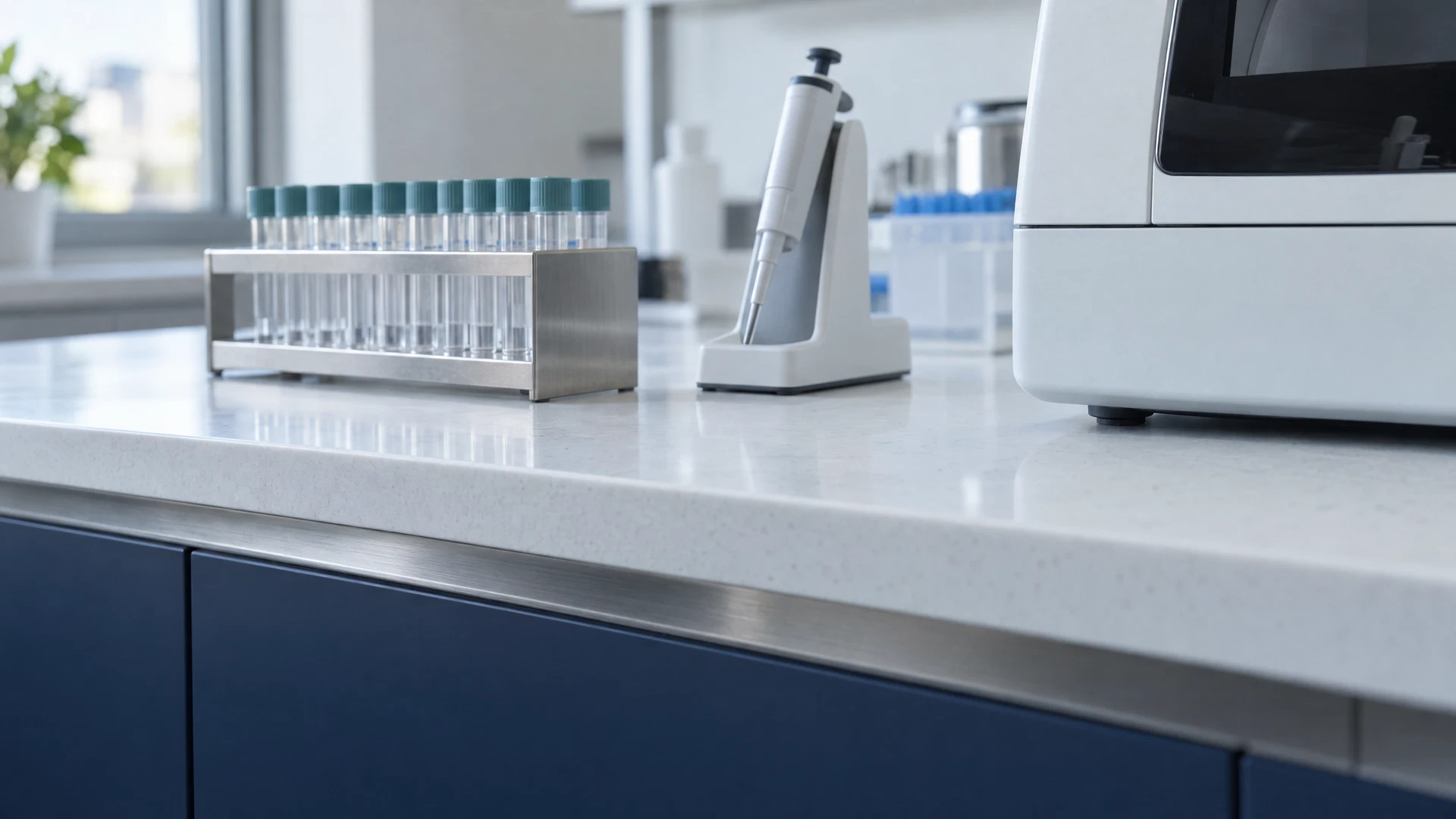
Detail of a molecular laboratory bench: sample rack, pipette, analyzer edge, and matte navy cabinetry under daylight.
Bench detail: specimen handling, extraction, and amplification in one workflow.Illustrative — not a practice installation
Practice Feasibility Review

Start with the fit. Then build the capability.

Your review evaluates volume, space, staffing, and implementation conditions. If the model fits, we outline the recommended launch path. If it does not, we tell you why.

For qualified practices. Subject to state, payer, volume, staffing, and compliance requirements.